
 40% OFF
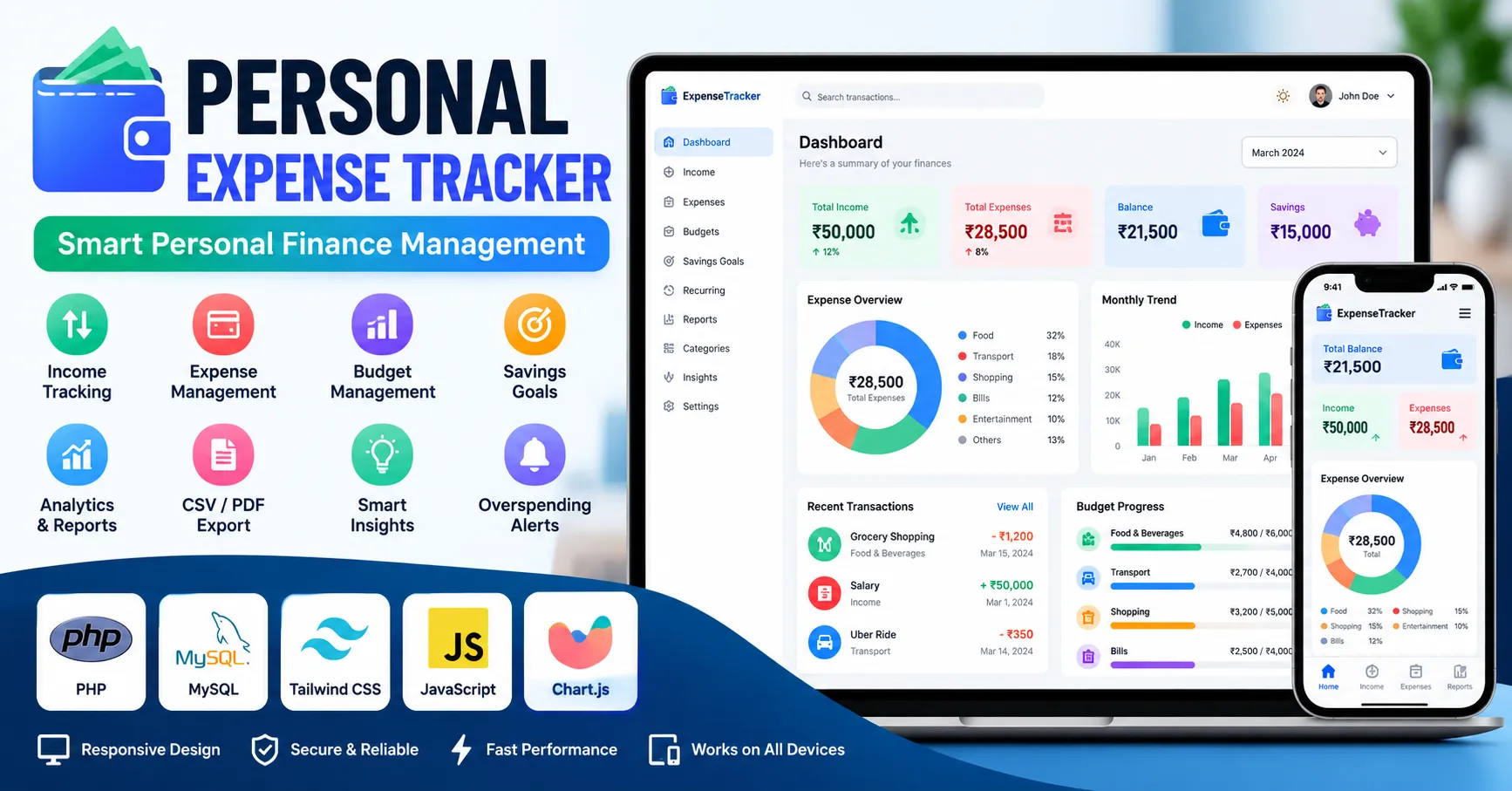
Personal Expense Tracker - Smart Web-Based Personal Finance Management System
Web ApplicationsPHPMySQLHTML5CSS3+7
₹3,000₹5,0004.1
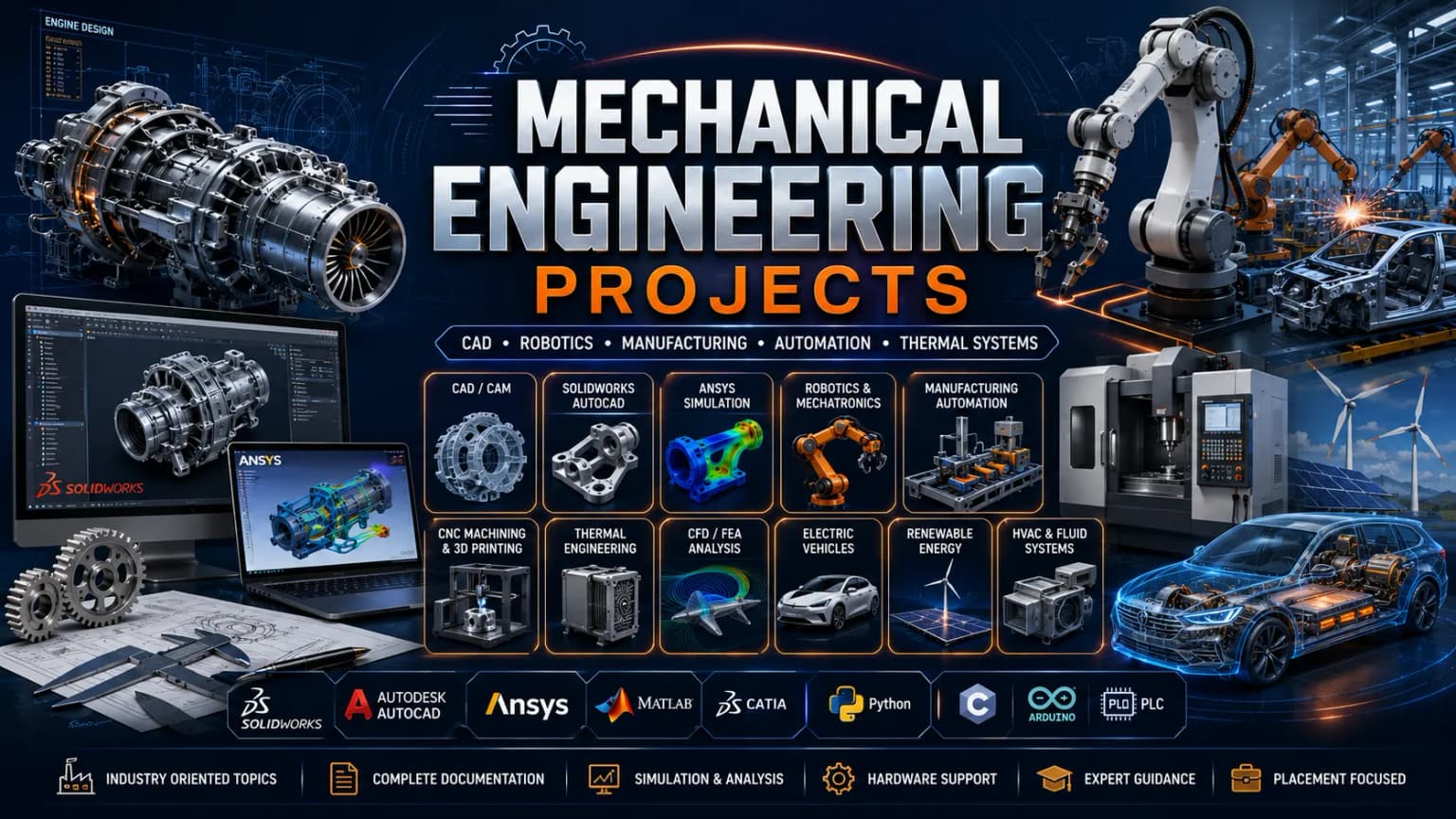
Looking for mechanical final year projects in Bangalore? Explore engineering project development support covering mechanical design, CAD modelling, manufacturing concepts, robotics, automation, mechatronics, thermal systems and engineering simulation. Get help with project selection, technical calculations, design planning, implementation, testing, engineering documentation and project demonstration based on your academic requirements.
Explore our Web Applications projects
40% OFF 50% OFF
 60% OFF
 20% OFF
 14% OFF
 14% OFF
 57% OFF
 29% OFF
Review the project abstract, engineering problem, objectives, design constraints, expected outputs and university requirements to establish a practical implementation scope.
Plan mechanical components, dimensions, geometries, assemblies, design concepts and engineering drawings using suitable computer-aided design tools.
Work through relevant mechanical calculations involving force, motion, load, torque, material properties, energy, dimensions and mechanical system constraints.
Plan suitable simulation studies for structural behaviour, thermal performance, fluid flow or mechanical motion where the project requires analytical evaluation.
Define mechanical assemblies, component selection, fabrication requirements and integration of motors, sensors or controllers where these are part of the agreed project scope.
Organise design outputs, engineering calculations, available test observations, technical drawings, bill of materials and project report material.
Develop mechanical component designs, assembly models, product structures, machine elements and engineering drawings based on functional and dimensional requirements.
Explore manufacturing processes, production planning, material selection, workshop operations, process improvement and mechanical product development.
Combine mechanical mechanisms with motors, sensors, controllers and automation logic to explore robotic systems, material handling and automated equipment.
Work on vehicle mechanisms, braking systems, steering concepts, suspension design, vehicle efficiency, automotive components and related engineering analysis.
Explore heat transfer, thermal systems, fluid flow, renewable energy applications, cooling systems, pressure systems and engineering performance analysis.
Develop mechanical concepts for agricultural equipment, irrigation mechanisms, solar-powered systems, energy utilisation and sustainable engineering applications.
Suitable for projects focused on mechanical component design, 2D drawings, 3D modelling, assembly structures, dimensions, material selection and design documentation. Physical fabrication is a separate requirement.
Suitable for studying mechanical behaviour using defined geometry, material properties, boundary conditions and engineering assumptions. Results should be supported by documented simulation settings and actual outputs.
Suitable for projects requiring a physical model, mechanical assembly, functional demonstration or hardware integration. Component sourcing, fabrication facilities, cost and testing arrangements must be confirmed before accepting the scope.
Provide the project title, abstract, reference paper, mechanical engineering branch requirements, preferred implementation format and university submission guidelines.
Identify the engineering challenge, project objectives, design constraints, expected functionality, required calculations and measurable outputs.
Select the mechanical design approach, software tools, materials, components and implementation methods based on the project scope.
Work on the agreed CAD models, engineering drawings, calculations, simulations or prototype-related components depending on the approved deliverables.
Review component dimensions, system operation, design behaviour, available simulation outputs or prototype test observations against the defined requirements.
Organise design files, engineering calculations, technical drawings, component information, testing observations and project report material for academic presentation.
Explore engineering project domains, application areas and project resources before selecting your mechanical engineering project.
Explore department-related academic resources and engineering project areas relevant to your branch.
CodeSelf connects this Mechanical Final Year Projects in Bangalore service to matching academic departments, verified project codebases, and idea libraries.
Need personalized capstone mentoring in Computer Science Engineering? Discuss deliverables, architecture reviews, and viva preparation with specialized mentors.
Discuss Computer ProjectExplore
Project catalog
Browse
Project technologies
Review
Project details
Contact
For guidance
Suitable mechanical final-year projects include CAD-based machine design, automated material handling systems, robotics, mechatronics, automobile mechanisms, thermal systems, renewable energy applications and manufacturing process improvements. The best choice depends on the engineering problem, available resources, implementation complexity and evaluation requirements.
Mechanical project areas include design and fabrication, CAD/CAM, automobile engineering, robotics, mechatronics, thermal engineering, fluid mechanics, manufacturing, agricultural machinery and renewable energy. The available implementation options depend on the specific project requirements and confirmed development capabilities.
Yes. You can share your abstract, reference paper, problem statement and university guidelines for technical review. The project objectives, design requirements, implementation method, required tools and deliverables can then be discussed before development.
CAD-related deliverables can be discussed for projects requiring component modelling, assembly design, dimensions and engineering drawings. The required software, file formats, drawing details and design scope should be confirmed before starting.
ANSYS-based engineering analysis can be considered when the project requires structural, thermal or fluid-flow simulation and the appropriate software access and engineering inputs are available. The analysis should document geometry, material properties, boundary conditions, solver settings and actual outputs.
Prototype-oriented requirements can be reviewed based on mechanical design, component availability, material selection, fabrication complexity and testing arrangements. Physical fabrication and assembly must be separately confirmed based on the agreed project scope.
Depending on the project, software options may include AutoCAD, SolidWorks, CATIA, Creo, ANSYS, MATLAB and Simulink. The final selection depends on whether the work involves CAD design, mechanical simulation, thermal analysis, mathematical modelling or control systems.
A CAD project primarily produces digital component models, assemblies and engineering drawings. A working prototype involves physical components or a mechanical assembly that can be demonstrated or tested. Simulation is another separate format used to analyse engineering behaviour using a defined model and assumptions.
Documentation can include project objectives, design methodology, engineering calculations, CAD drawings, component specifications, simulation outputs, testing observations and conclusions according to the agreed scope and university guidelines.
First define the project objectives and required implementation format. Then review design complexity, component costs, software requirements, fabrication needs and testing time. A CAD-only or simulation-based approach may require different resources from a project involving physical fabrication.
Technical explanation support can cover the problem statement, design decisions, working principle, mechanical calculations, component selection, testing method and project results. Students should understand and be able to explain their actual implementation.
Academic Focus & Guidance: Looking for mechanical final year projects in Bangalore? Explore engineering project development support covering mechanical design, CAD modelling, manufacturing concepts, robotics, automation, mechatronics, thermal systems and engineering simulation. Get help with project selection, technical calculations, design planning, implementation, testing, engineering documentation and project demonstration based on your academic requirements. Curriculum aligned with the Computer Science Engineering Department and Web Applications & Software Systems guidelines.Curriculum updated: 25 November 2026.
Connect with our senior engineering mentors to customize modules, review base papers, and plan your capstone submission.