50% OFF
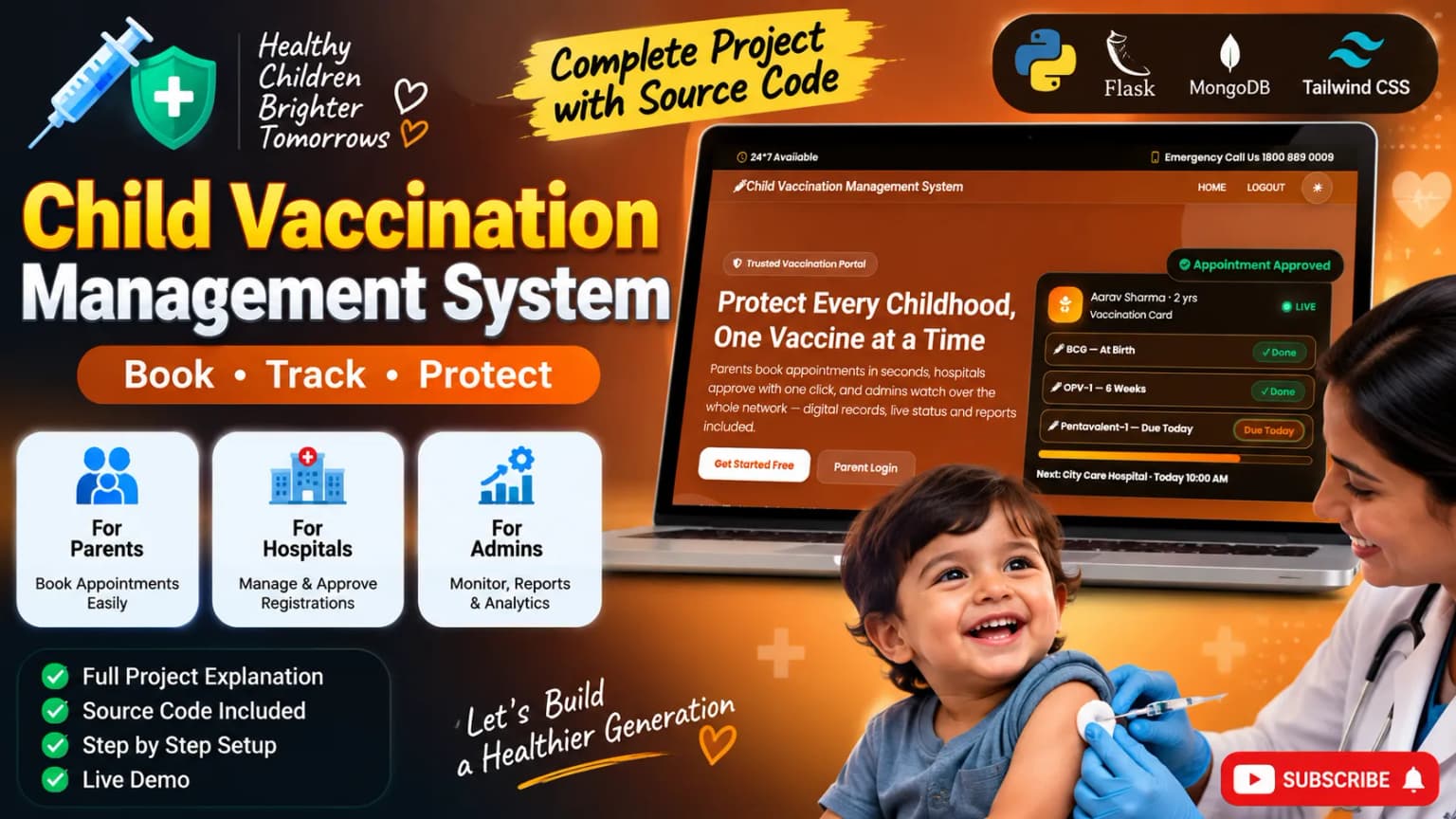
Child Vaccination Management System
Web ApplicationsPythonFlaskFlask-LoginFlask-Mail+8
₹2,999₹5,9835.0

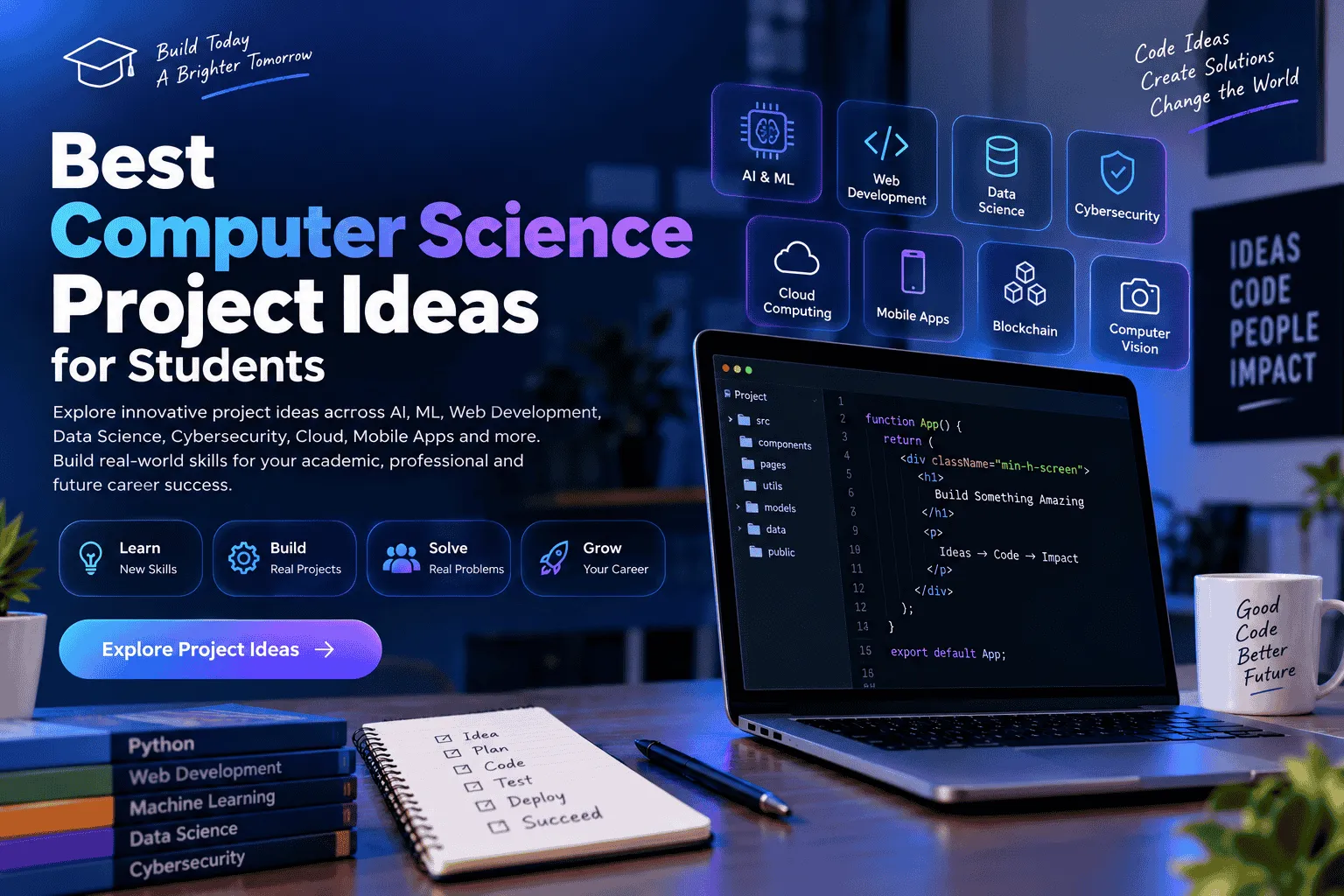
Explore the best Computer Science project ideas for students across Artificial Intelligence, Machine Learning, Web Development, Full Stack Development, Data Science, Cybersecurity, Cloud Computing, Mobile Applications, Blockchain, Database Systems, and other modern technology domains. Discover practical project topics that help you apply programming concepts, solve real-world problems, build working applications, and develop skills for academic projects, internships, portfolios, and technical careers.
Bottom line: Best Computer Science Project Ideas for Students from CodeSelf Projects is built for B.Tech, BE, MCA, BCA, and diploma students — with complete source code, documentation, demo, and viva support. Last updated: 22 September 2026.
Explore our best projects
Build intelligent Computer Science applications using AI for prediction, automation, decision support, virtual assistants, healthcare, education, and business solutions.
Develop predictive and classification systems using supervised learning, unsupervised learning, feature engineering, model training, and evaluation.
Create responsive web applications using modern frontend technologies, backend APIs, databases, authentication, dashboards, and deployment.
Build complete end-to-end applications combining frontend interfaces, backend services, APIs, databases, authentication, and deployment.
Work with data preprocessing, analytics, visualization, statistical methods, predictive modeling, and data-driven decision systems.
Explore secure systems involving authentication, threat detection, vulnerability analysis, network monitoring, access control, and security analytics.
Develop cloud-based applications involving storage, deployment, APIs, scalable services, monitoring, distributed systems, and cloud automation.
Create Android or cross-platform applications for education, healthcare, productivity, finance, communication, commerce, and everyday utility.
Build data-centric applications involving database design, queries, transactions, reporting, analytics, data security, and information management.
Develop decentralized applications involving secure records, certificate verification, transaction tracking, digital identity, and smart contracts.
Create language-based applications such as sentiment analysis, text classification, document processing, chatbots, summarization, and question-answering systems.
Build image and video applications involving object detection, image classification, facial recognition, OCR, visual inspection, and intelligent monitoring.
Develop a Machine Learning application that analyzes selected healthcare data to assist with disease risk prediction and intelligent decision support.
Build an intelligent chatbot that answers student questions about courses, schedules, academic services, and frequently requested information.
Analyze academic data and create a predictive model that identifies performance patterns and estimates student outcomes.
Develop an automated recruitment application that extracts resume information and helps classify candidates according to selected job requirements.
Create a complete online shopping system with product management, authentication, cart, orders, payments, search, and administration.
Build a digital learning platform with courses, lessons, student accounts, assignments, assessments, progress tracking, and administration.
Develop an attendance platform using QR codes, facial recognition, RFID, or another digital identification approach.
Create a recommendation engine for products, courses, movies, jobs, or other content using user behavior and Machine Learning techniques.
Build a security monitoring application that analyzes network or system activity to identify suspicious patterns and potential threats.
Develop a cybersecurity solution that analyzes website characteristics and applies Machine Learning techniques to identify potentially fraudulent websites.
Create an interactive dashboard that converts structured datasets into visualizations, trends, reports, and useful analytical insights.
Develop a centralized application for patient registration, doctor management, appointments, medical records, billing, and hospital administration.
Build an examination platform with question management, timed tests, automatic evaluation, student accounts, and result analytics.
Create an application for tracking products, stock levels, suppliers, purchases, sales, low-stock alerts, and inventory reports.
Develop a secure file management application with uploads, downloads, folder organization, access control, sharing, and cloud storage integration.
Build a computer vision application that identifies registered users and records attendance with date and time information.
Create a platform connecting employers and applicants with job listings, search, applications, profiles, authentication, and recruitment management.
Develop a personal or organizational finance application for recording expenses, managing budgets, generating reports, and analyzing spending patterns.
Build a platform for event creation, registration, scheduling, participant management, notifications, and event reporting.
Develop a verification system that helps organizations issue and validate digital certificates using blockchain-based records.
Identify a Real Problem
Choose a specific problem that can be addressed through software, data, automation, Artificial Intelligence, or another Computer Science approach.
Define Objectives and Scope
Write clear project objectives, identify the target users, define the major features, and keep the scope realistic for the available development time.
Select the Technology Stack
Choose suitable programming languages, frameworks, databases, APIs, libraries, cloud services, or AI tools based on the project's requirements.
Design the System
Prepare the system architecture, database structure, user flow, modules, interfaces, APIs, algorithms, and other technical components before implementation.
Build the Application
Implement the project module by module, integrate the frontend and backend, connect databases and APIs, and develop the core functionality.
Test and Validate
Perform functional, performance, usability, security, accuracy, and integration testing and fix issues identified during validation.
Document and Demonstrate
Prepare the project report, architecture diagrams, screenshots, testing results, presentation, source code structure, and a working demonstration.
Apply programming concepts, algorithms, data structures, debugging techniques, and logical problem-solving to build a functional software solution.
Design databases, create relationships, write queries, manage data integrity, and implement efficient data storage and retrieval.
Build responsive and user-friendly interfaces using suitable web or mobile development technologies and modern interface design principles.
Develop backend services, business logic, authentication, APIs, integrations, validation, and server-side functionality for complete applications.
Demonstrate skills in data preprocessing, model development, training, evaluation, prediction, and intelligent application integration.
Apply authentication, authorization, input validation, secure data handling, monitoring, and other security practices to protect applications and users.
Design test cases, identify defects, validate system behavior, measure performance, and improve the reliability of the completed application.
Connect application components, configure deployment environments, integrate external services, manage versions, and prepare the project for real-world use.
25,000+
Projects
10,000+
Happy Students
100+
Technologies
24/7
Expert Support
Popular Computer Science project areas include Artificial Intelligence, Machine Learning, Full Stack Development, Web Development, Data Science, Cybersecurity, Cloud Computing, Mobile Applications, Blockchain, Databases, Natural Language Processing, and Computer Vision.
Choose a project based on your programming skills, area of interest, academic requirements, available development time, required technologies, available datasets or resources, and the level of complexity you can realistically implement and demonstrate.
Yes. The project ideas can be adapted for final year projects by defining a clear problem, expanding the feature set, adding appropriate testing and evaluation, and documenting the architecture, methodology, implementation, and results.
Depending on the project, students can use Python, Java, JavaScript, React, Node.js, Flask, Django, databases such as MySQL or MongoDB, Machine Learning frameworks, cloud platforms, APIs, and other suitable development tools.
Yes. Computer Science projects can integrate AI and Machine Learning for prediction, classification, recommendation, natural language processing, computer vision, automation, intelligent search, and other data-driven applications.
Yes. Many project concepts can be reduced to a smaller scope for mini or semester projects by focusing on the core functionality and limiting the number of modules, integrations, and advanced features.
A complete project generally includes a clear problem statement, objectives, requirements, system architecture, technology stack, implementation, database or data design, testing, results, documentation, presentation, and a working demonstration.
Start with a clearly defined practical problem and design the system around actual user requirements. Include appropriate authentication, data management, APIs, testing, security, analytics, and deployment features where they are relevant to the problem.
Our team of experts can help you select the perfect project based on your skills, interests, and academic requirements.