50% OFF
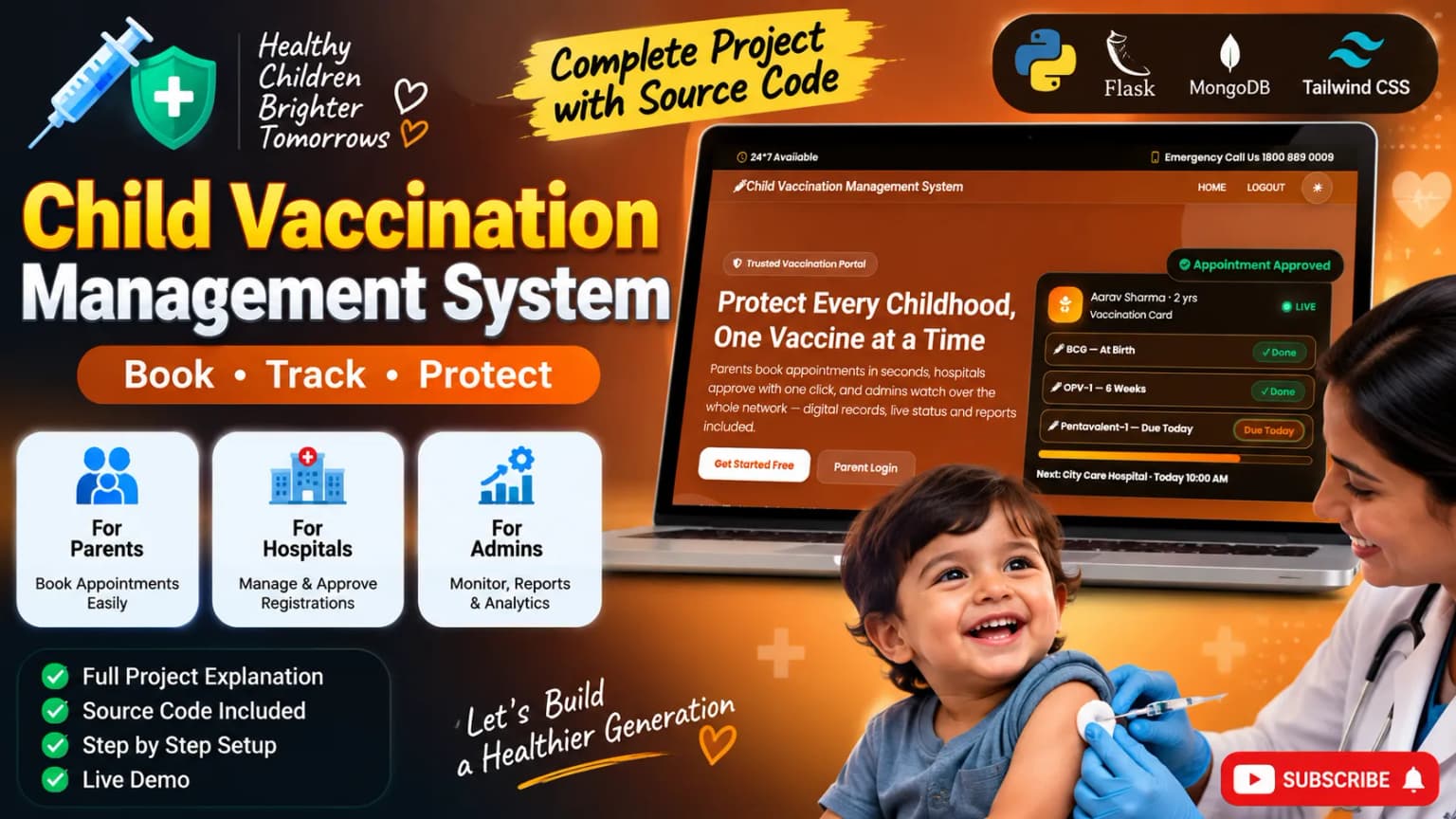
Child Vaccination Management System
Web ApplicationsPythonFlaskFlask-LoginFlask-Mail+8
₹2,999₹5,9835.0

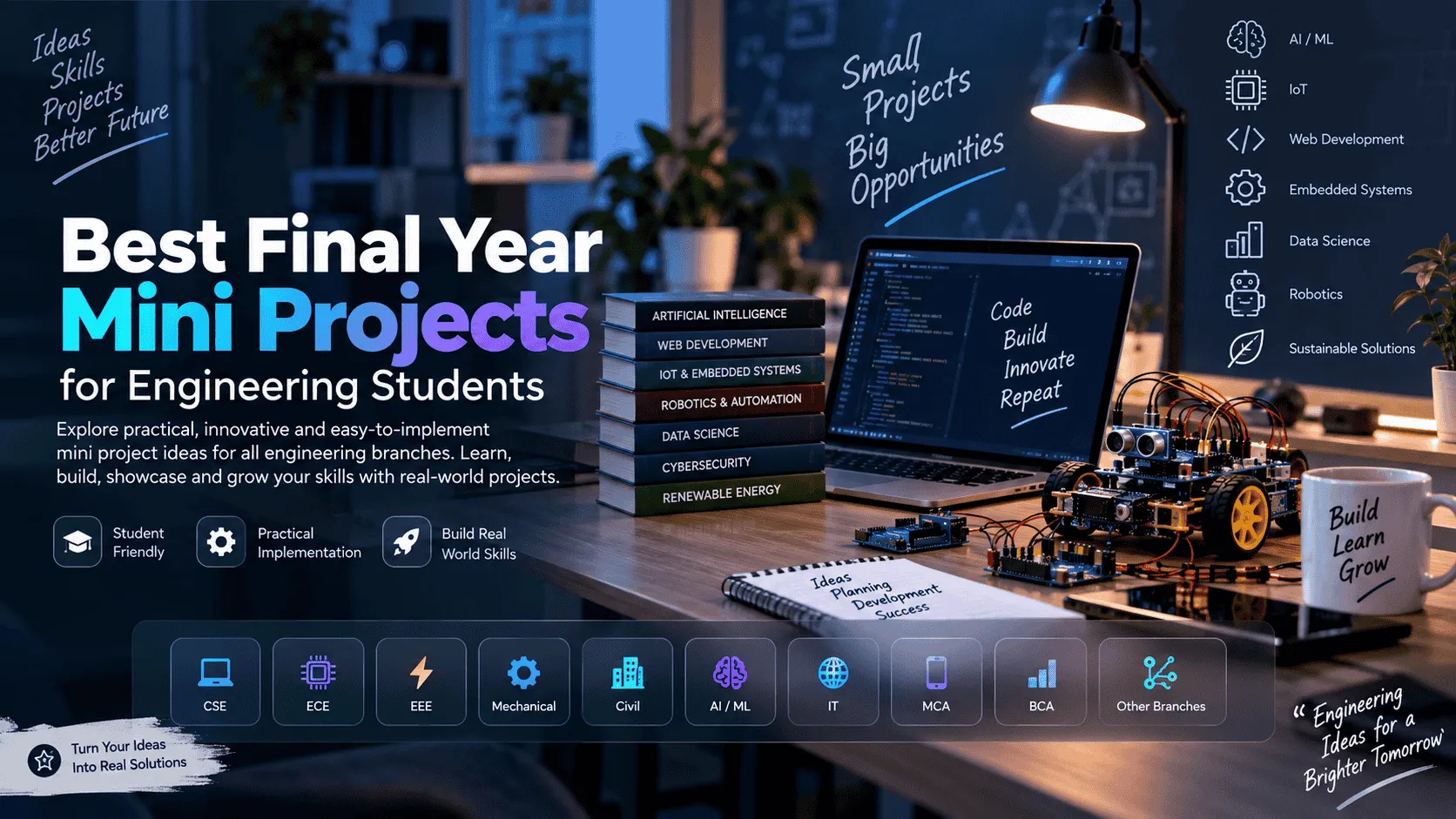
Explore the best final year mini projects for engineering students across Computer Science, Information Science, Electronics, Electrical, Mechanical, Civil, Artificial Intelligence, IoT, Web Development, Data Science, and other technical fields. Choose practical mini project topics that can be developed within an academic timeline while helping you strengthen programming, hardware, problem-solving, database, automation, and real-world implementation skills.
Bottom line: Best Final Year Mini Projects for Engineering Students from CodeSelf Projects is built for B.Tech, BE, MCA, BCA, and diploma students — with complete source code, documentation, demo, and viva support. Last updated: 22 September 2026.
Explore our best projects
Build intelligent applications using Artificial Intelligence, Machine Learning, Deep Learning, Natural Language Processing, Computer Vision, and predictive models.
Develop practical web applications using modern frontend, backend, database, authentication, API integration, and deployment technologies.
Create connected systems using sensors, microcontrollers, communication modules, cloud platforms, dashboards, and real-time monitoring.
Develop embedded applications using microcontrollers, sensors, actuators, communication interfaces, and real-time control systems.
Explore projects involving secure authentication, threat detection, network monitoring, vulnerability analysis, access control, and security monitoring.
Build data-driven applications using data preprocessing, analytics, visualization, statistical techniques, and predictive Machine Learning models.
Develop cloud-enabled applications involving storage, deployment, APIs, monitoring, distributed services, and scalable application architectures.
Create Android or cross-platform mobile applications for education, healthcare, productivity, finance, communication, and everyday use cases.
Design robotic systems involving sensors, motors, controllers, automation, computer vision, navigation, and intelligent decision-making.
Develop automated systems for monitoring, control, workflow management, industrial applications, smart environments, and process optimization.
Explore practical engineering projects related to solar energy, energy monitoring, smart power systems, battery management, and sustainable technology.
Build ECE-oriented mini projects involving wireless communication, signal processing, embedded systems, sensors, automation, and electronic control systems.
Develop a Machine Learning application that analyzes academic and related data to predict student performance and identify important learning factors.
Create an automated attendance system using QR codes, RFID, facial recognition, or web-based attendance tracking.
Build a chatbot that answers student queries about courses, schedules, academic information, and frequently asked questions.
Develop a learning platform with student accounts, course materials, assignments, assessments, progress tracking, and administration.
Build a web application for managing college events, registrations, schedules, participants, notifications, and event reports.
Monitor soil moisture, temperature, humidity, and other environmental parameters using sensors and automatically control irrigation.
Develop a healthcare-oriented application that analyzes selected patient attributes and applies Machine Learning for disease risk prediction.
Create a complete shopping application with product management, user authentication, search, cart, orders, payments, and administration.
Build a system for monitoring waste collection, identifying waste categories, tracking bins, or improving waste management workflows.
Develop a security monitoring application that analyzes activity or network data to identify suspicious patterns and potential threats.
Create an interactive dashboard that transforms structured datasets into charts, trends, reports, comparisons, and decision-support insights.
Develop a smart home solution that allows users to monitor and control appliances, lighting, sensors, and security devices.
Build an application for managing products, stock levels, suppliers, sales, purchase records, low-stock alerts, and inventory reports.
Create a personalized recommendation engine for products, courses, movies, jobs, or educational content using Machine Learning techniques.
Develop a secure examination platform with question management, timed tests, automatic evaluation, student accounts, and result analytics.
Build a healthcare appointment platform for patient registration, doctor schedules, bookings, notifications, and appointment management.
Develop a safety-oriented system that detects possible vehicle accidents using sensors or intelligent algorithms and generates emergency alerts.
Create a system that measures energy consumption and displays usage data through dashboards, reports, alerts, and monitoring tools.
Monitor machine conditions and environmental parameters using connected sensors and display real-time information through a centralized dashboard.
Develop a computer vision application that recognizes registered users and automatically records attendance with date and time information.
Identify a Suitable Problem
Choose a practical problem that is relevant to your engineering branch, understandable to your target users, and suitable for a mini project scope.
Select the Project Technology
Choose suitable programming languages, frameworks, databases, sensors, microcontrollers, cloud services, or development tools according to the project requirements.
Define Features and Project Scope
List the main modules, user roles, inputs, outputs, functional requirements, and expected results before starting implementation.
Design the System
Prepare the system architecture, database design, workflow, interface structure, hardware connections, algorithms, and module relationships.
Implement the Project
Develop the project module by module, integrate the required components, connect databases or APIs, and build the main working features.
Test and Validate the Solution
Test functionality, performance, usability, accuracy, connectivity, security, and reliability to identify and fix implementation issues.
Prepare Documentation and Demo
Complete the project report, diagrams, screenshots, source code organization, presentation, testing results, and final working demonstration.
The project should address a specific and understandable problem with clearly defined objectives.
The solution should demonstrate real functionality rather than being only a theoretical concept.
Features and complexity should fit the available academic timeline, team size, skills, and resources.
The selected technology stack or hardware should directly support the project's objectives and implementation requirements.
A good project should include proper testing, measurable results, observations, and evidence that the system works as intended.
The project should have clear documentation covering requirements, design, implementation, testing, results, and future improvements.
The final system should be easy to demonstrate with a clear workflow and understandable project functionality.
The project should help students develop practical technical skills that can be explained during presentations, evaluations, and interviews.
25,000+
Projects
10,000+
Happy Students
100+
Technologies
24/7
Expert Support
Popular final year mini project areas include Artificial Intelligence, Machine Learning, Web Development, IoT, Embedded Systems, Cybersecurity, Data Science, Cloud Computing, Robotics, Automation, Mobile Applications, and Smart Monitoring Systems.
Choose a project based on your engineering branch, technical skills, available development time, budget, hardware requirements, academic guidelines, and personal interests. The project should solve a clear problem and have a realistic implementation scope.
Yes. CSE and IT students can choose projects in Artificial Intelligence, Machine Learning, Full Stack Development, Web Applications, Data Science, Cybersecurity, Cloud Computing, Mobile Applications, and database systems.
Yes. Engineering mini projects can be adapted to different branches. ECE and EEE students can focus on IoT, embedded systems, electronics, automation, and energy systems, while Mechanical and Civil students can select projects related to robotics, manufacturing, smart infrastructure, monitoring, and sustainable engineering.
Yes. Hardware and software can be combined in projects such as IoT monitoring systems, smart agriculture, home automation, industrial monitoring, robotics, energy monitoring, and intelligent control systems.
The scope should be large enough to demonstrate meaningful implementation but small enough to complete, test, document, and demonstrate within the available academic timeline. It is better to build a reliable core system and add useful features gradually.
Depending on the project, students can use Python, Java, JavaScript, React, Node.js, Flask, Django, databases, Machine Learning frameworks, cloud platforms, IoT platforms, Arduino, ESP32, Raspberry Pi, sensors, microcontrollers, and other suitable technologies.
A complete project generally includes a problem statement, objectives, requirements, system design, implementation, testing, results, documentation, source code, screenshots, presentation materials, and a working demonstration.
Our team of experts can help you select the perfect project based on your skills, interests, and academic requirements.