50% OFF
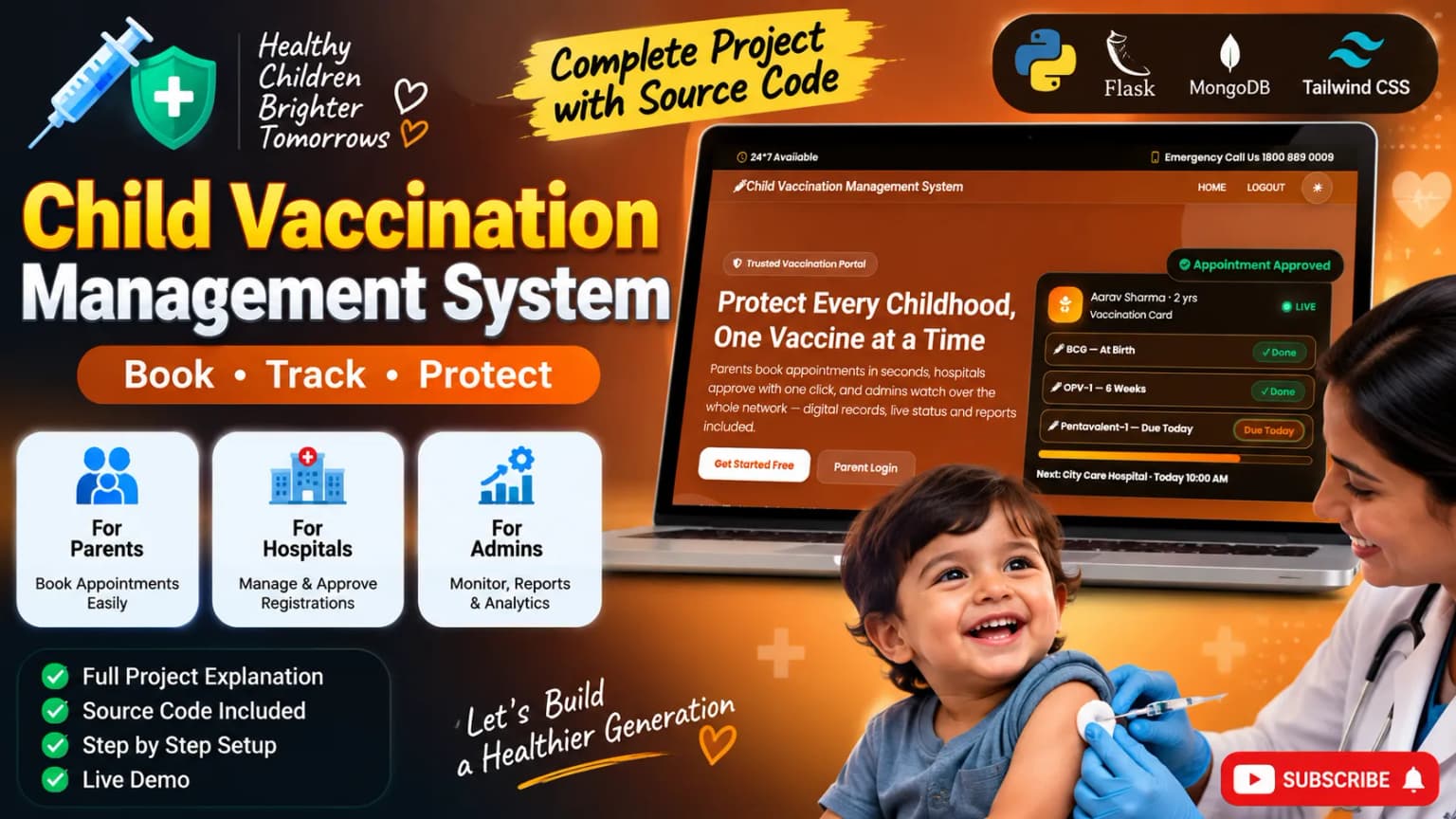
Child Vaccination Management System
Web ApplicationsPythonFlaskFlask-LoginFlask-Mail+8
₹2,999₹5,9835.0

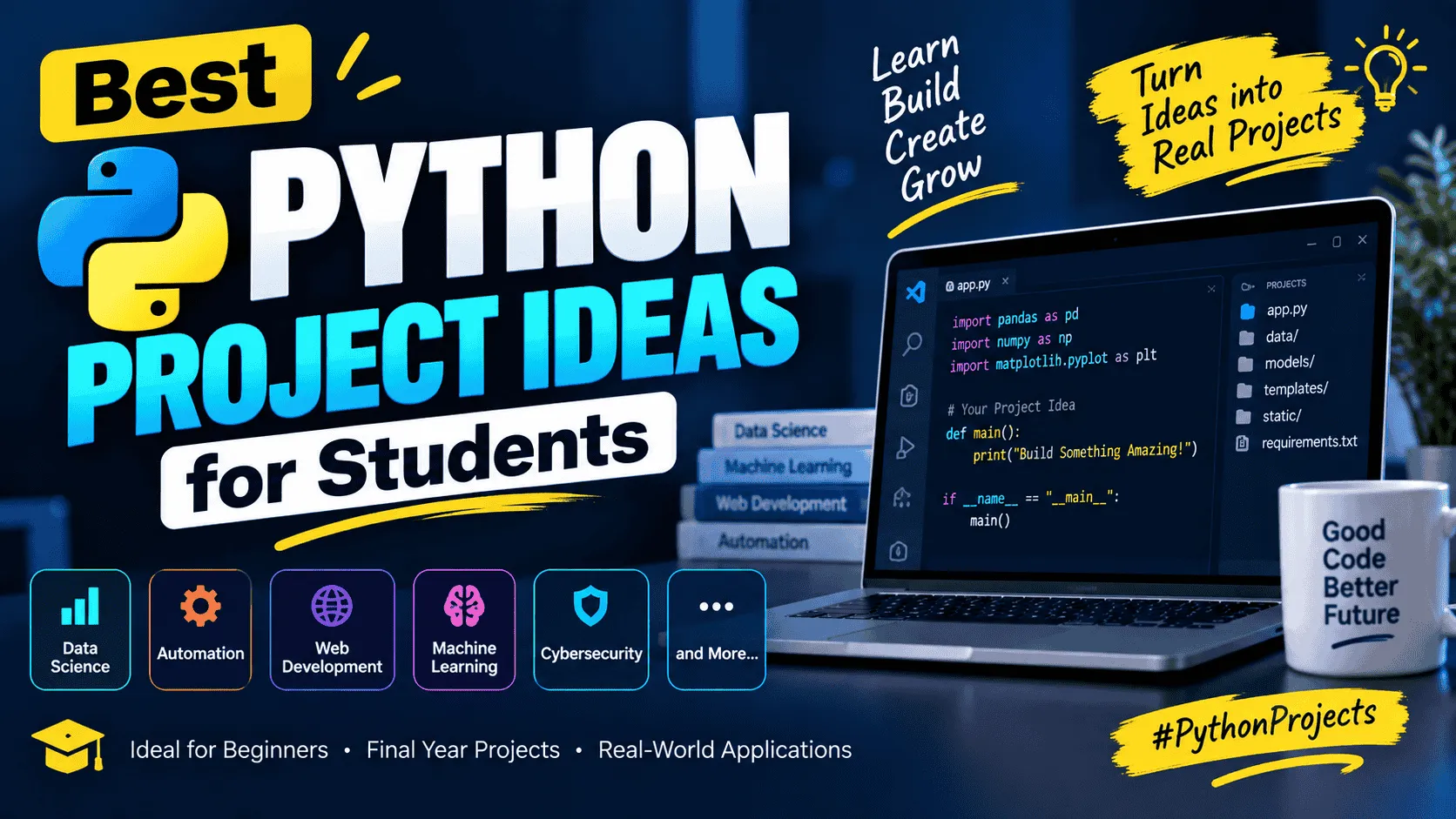
Explore the best Python project ideas for students across Artificial Intelligence, Machine Learning, Data Science, Web Development, Automation, Cybersecurity, APIs, Computer Vision, Natural Language Processing, and software applications. Discover practical Python project topics for beginners, intermediate learners, and final year students that help you strengthen programming skills, work with real datasets, build useful applications, and gain hands-on experience with modern Python technologies.
Bottom line: Best Python Project Ideas for Students from CodeSelf Projects is built for B.Tech, BE, MCA, BCA, and diploma students — with complete source code, documentation, demo, and viva support. Last updated: 23 September 2026.
Explore our best projects
Create useful automation tools for file management, report generation, task processing, notifications, data collection, and repetitive workflows.
Build web applications and backend services using Python frameworks such as Flask or Django with databases, authentication, APIs, and business logic.
Analyze datasets using Python tools for preprocessing, statistics, visualization, exploratory analysis, and data-driven decision making.
Develop predictive and classification applications using Machine Learning algorithms, feature engineering, model training, and evaluation.
Build intelligent applications using Artificial Intelligence techniques for prediction, recommendation, automation, chatbots, and decision support.
Develop image and video applications using OpenCV and deep learning for object detection, classification, face recognition, OCR, and visual analysis.
Create language-processing applications for sentiment analysis, text classification, document processing, chatbots, summarization, and question answering.
Build security-related applications for monitoring, log analysis, threat detection, password auditing, suspicious activity analysis, and security automation.
Develop REST APIs and backend systems using Python frameworks with authentication, database integration, validation, business logic, and external service integration.
Use Python with Raspberry Pi or other platforms for sensor monitoring, automation, device communication, data collection, and IoT dashboards.
Create practical desktop software for management, billing, inventory, education, productivity, and utility applications.
Transform datasets into meaningful charts, dashboards, reports, and interactive visualizations using Python data visualization libraries.
Build a Python application for managing student profiles, academic records, attendance, courses, and administrative information.
Develop a system for managing books, members, borrowing, returns, search, availability, and library records.
Create a Python application for recording expenses, organizing spending categories, setting budgets, and generating financial summaries.
Build a quiz platform with question management, categories, timed tests, scoring, user accounts, and result tracking.
Develop an inventory application for products, stock levels, suppliers, purchases, sales, alerts, and reports.
Create a Python-based chatbot that answers common student questions and provides automated academic information.
Use Python and Machine Learning to analyze academic data and predict student performance based on relevant historical features.
Develop a regression-based application that estimates property prices from housing characteristics using a suitable dataset.
Analyze customer records and build a Machine Learning model to predict the likelihood of customers discontinuing a service.
Create a cybersecurity application that analyzes website characteristics and uses Machine Learning to identify potentially suspicious websites.
Build a Python computer vision application that recognizes registered users and records attendance automatically.
Develop an image or video application using computer vision and deep learning to detect and classify objects.
Analyze text from reviews or social media and classify sentiment into categories such as positive, negative, or neutral.
Build a Python NLP application that extracts resume information and compares candidate profiles against selected job requirements.
Use historical sales data to create a forecasting model that estimates future sales and reveals important trends.
Develop a personalized recommendation engine for products, courses, movies, books, jobs, or other content using data-driven techniques.
Create a Python web or desktop application that records attendance through QR code scanning and maintains centralized records.
Analyze weather datasets and present temperature, rainfall, humidity, seasonal patterns, and other measurements through visualizations.
Build a Python utility that processes system or network logs to identify unusual activity, errors, and potentially suspicious patterns.
Create a Python automation tool that organizes files into folders, renames documents, removes duplicates, and performs scheduled cleanup tasks.
Start with calculators, quiz applications, expense trackers, file organizers, student management systems, simple automation tools, and basic data analysis.
Explore database applications, Flask or Django systems, REST APIs, dashboards, automation platforms, data analytics, and introductory Machine Learning.
Work on Deep Learning, Computer Vision, NLP, cybersecurity analytics, recommendation systems, predictive maintenance, and intelligent automation.
Build applications using MySQL, PostgreSQL, SQLite, MongoDB, or other databases for authentication, records, reporting, and data management.
Develop applications that consume or expose REST APIs for payments, maps, notifications, data services, authentication, and third-party integrations.
Integrate trained Machine Learning or Deep Learning models into usable applications for prediction, classification, recommendation, or intelligent assistance.
Build larger applications with multiple modules, real-world problem statements, testing, documentation, deployment, and measurable technical results.
Create practical applications with clean architecture, useful interfaces, APIs, deployment, documentation, and features that demonstrate real development skills.
Choose a Clear Problem
Select a specific problem that can be solved using Python and define the target users, required inputs, expected outputs, and project objectives.
Select the Project Type
Decide whether the project will focus on automation, web development, data science, Machine Learning, AI, computer vision, cybersecurity, APIs, or another Python domain.
Choose Libraries and Frameworks
Select suitable tools such as Flask, Django, FastAPI, Pandas, NumPy, Scikit-learn, TensorFlow, PyTorch, OpenCV, or other libraries according to project needs.
Design the Application
Plan the modules, user interface, database structure, API flow, data processing pipeline, model workflow, or automation logic before coding.
Implement the Core Features
Develop the application module by module, integrate databases or APIs, implement the main business logic, and organize the code into maintainable components.
Test and Debug
Test the functionality, input validation, database operations, APIs, model outputs, performance, and error handling, then fix issues found during testing.
Document and Deploy
Prepare project documentation, screenshots, architecture diagrams, testing results, source code organization, and deployment configuration where required.
The project should address a specific problem with clearly defined objectives and expected outcomes.
Organize Python code into logical modules, reusable functions, classes, and components where appropriate.
Use libraries and frameworks that directly support the project requirements rather than adding unnecessary dependencies.
Implement reliable data storage, validation, processing, and retrieval when the project requires persistent or analytical data.
Validate inputs, handle expected failures, test important functionality, and record meaningful results.
Where appropriate, provide a clear web, desktop, dashboard, API, or other interface that makes the solution usable.
Explain the project objectives, architecture, technologies, implementation, testing, results, limitations, and future improvements.
The completed application should provide a reproducible workflow that can be demonstrated and explained during academic evaluation.
25,000+
Projects
10,000+
Happy Students
100+
Technologies
24/7
Expert Support
Popular Python project ideas include Student Management Systems, automation tools, web applications, data analysis projects, Machine Learning applications, chatbots, computer vision systems, cybersecurity tools, recommendation systems, and intelligent prediction applications.
Beginners can start with projects such as calculators, quiz applications, expense trackers, file management tools, student management systems, library management systems, simple automation scripts, and basic data analysis applications.
Final year students can build larger projects involving Artificial Intelligence, Machine Learning, Data Science, Computer Vision, Natural Language Processing, cybersecurity, web applications, APIs, IoT, intelligent automation, and real-world management systems.
Depending on the project, students can use libraries and frameworks such as Pandas, NumPy, Matplotlib, Scikit-learn, TensorFlow, PyTorch, OpenCV, Flask, Django, FastAPI, and other suitable Python packages.
Yes. Python is widely used for AI and Machine Learning projects involving prediction, classification, recommendation, natural language processing, computer vision, deep learning, and intelligent automation.
Yes. Python applications can work with databases such as SQLite, MySQL, PostgreSQL, MongoDB, and other database systems for storing users, transactions, application records, analytical data, and other project information.
Yes. Python web frameworks such as Flask, Django, and FastAPI can be used to build web applications, backend services, REST APIs, authentication systems, dashboards, and database-driven platforms.
Choose a project based on your programming level, area of interest, academic requirements, available development time, required datasets or hardware, and the technologies you want to demonstrate. The project should have a clear problem and manageable scope.
A complete Python project should generally include a clear problem statement, objectives, suitable technology stack, organized source code, required data or database, implementation, testing, documentation, results, and a working demonstration.
Our team of experts can help you select the perfect project based on your skills, interests, and academic requirements.